Hong Kong To Macau By Bus: The HZMB Bridge Coach Explained
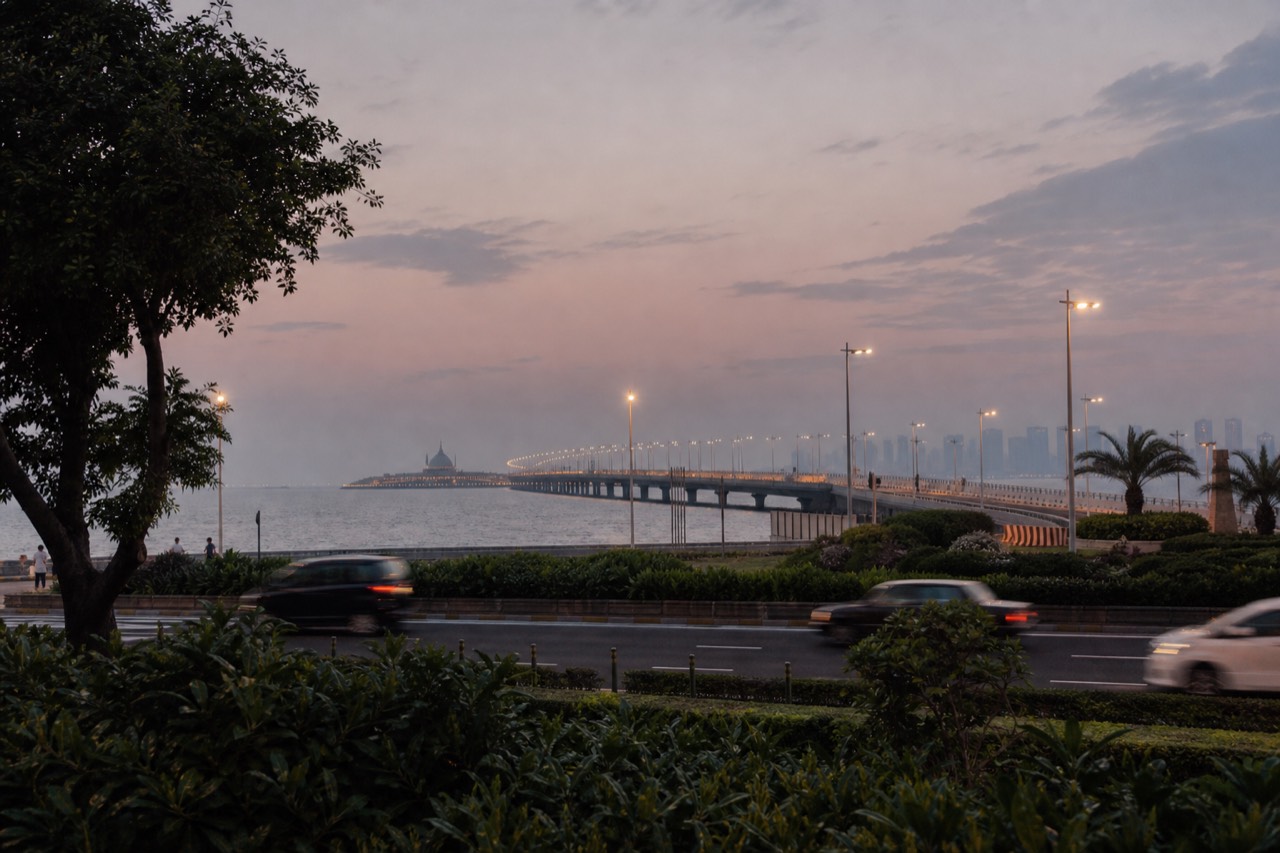
The Hong Kong-Zhuhai-Macau Bridge coach is the one Hong Kong to Macau route most show guides ignore, yet it runs 24 hours a day, costs less than half the ferry, and lands you on the Cotai side of the city, the side the theatre is on.
Short answer
The Hong Kong to Macau bus is the HZMB Golden Bus shuttle, running 24 hours between Hong Kong Port and Macau Port for HK$65 daytime and HK$70 overnight, with departures every 5 to 10 minutes at peak. You clear both borders at the bridge ports. It is the cheapest and only overnight cross-border link, and it lands on the Cotai side, near City of Dreams.
The Hong Kong-Zhuhai-Macau Bridge changed the arithmetic of a Macau trip more quietly than any ferry timetable ever did. Before the bridge, your choices were a hydrofoil, a slow coach around the estuary, or nothing after the last evening sailing. Now a shuttle bus crosses the bridge around the clock, departs every few minutes at peak, and costs less than a sandwich and a coffee in Central. The House of Dancing Water Tickets guide to this route exists because almost every show page tells you to take the ferry and never mentions that the bus is the only option that still runs at two in the morning, and the only one that lands you on the Cotai side of the city where the theatre actually is.
Is There A Direct Bus From Hong Kong To Macau?
Yes. The direct service is the HZMB Golden Bus, a shuttle running 24 hours a day between Hong Kong Port and Macau Port across the Hong Kong-Zhuhai-Macau Bridge, published at HK$65 one way in the daytime and HK$70 overnight, with departures every 5 to 10 minutes at daytime peak and every 30 minutes overnight.
That last clause matters more than it sounds. The Golden Bus does not drop you at a hotel, a ferry terminal or a theatre door. It runs from the Hong Kong Port building on an artificial island near the airport to the Macau Port building on an artificial island off Cotai, and your journey includes walking through two border checkpoints in between. Think of it as a very short, very frequent ferry with wheels, where the "terminal" is the border itself. It is a point-to-point shuttle, not a city-to-city coach, so you ride it between the two bridge ports only.
The operator, HZMBus, publishes the fares and the frequency on its own site, and the service runs every hour of every day, which no ferry or airport link in this corridor can claim. No operator publishes a crossing duration for the bridge, so treat any minute figure you read elsewhere with suspicion: the driving time is short, and the border formalities at both ends are what determine your total journey, and those depend on crowds.
A fair warning before you plan: the old Hong Kong to Macau coach routes that wound around the Pearl River estuary through Shenzhen and Zhuhai are largely a memory for visitors, and the pre-2020 habit of sending people to the China Ferry Terminal in Tsim Sha Tsui for a Macau ferry is now flatly wrong. Only the Sheung Wan terminal has scheduled Macau sailings in 2026. The bridge bus is the modern overland answer, and this guide is about it.
Where Do You Board The Hong Kong To Macau Bus?
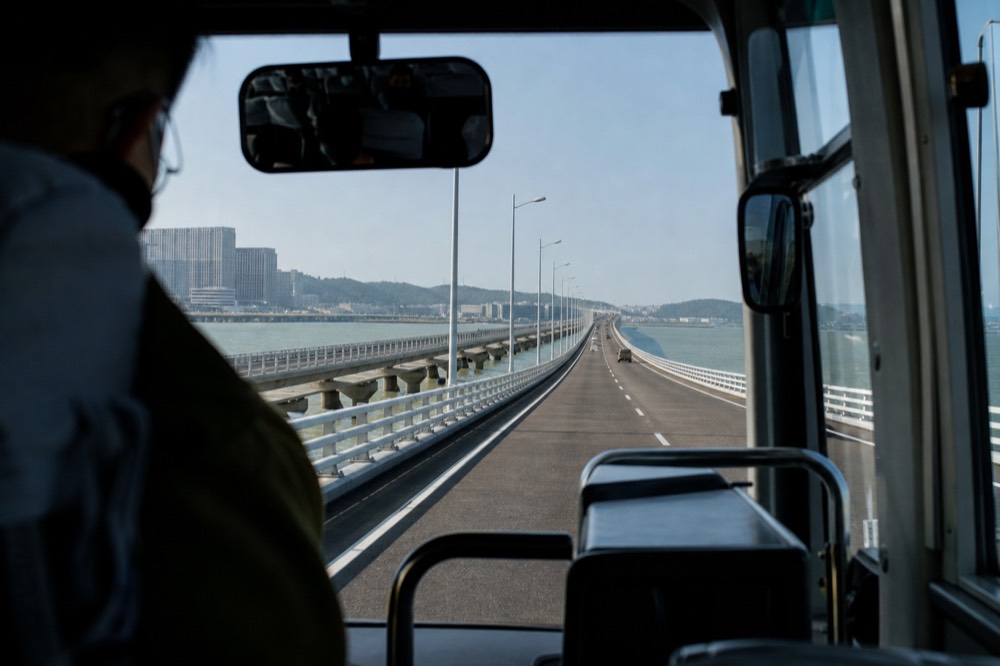
You board at Hong Kong Port, the bridge's checkpoint island reached from the airport side of Lantau, and you arrive at Macau Port, the matching checkpoint island off the Cotai coast. The shuttle itself runs only between those two buildings. To reach Hong Kong Port you take a bus, taxi or the airport's transport links to the port's kerbside first, since the shuttle has no downtown boarding points.
Hong Kong Port sits next to Hong Kong International Airport on Chek Lap Kok, which shapes the whole route's logic. If you are coming from Kowloon or Hong Kong Island, you first travel to the port: frequent franchised buses serve it from many districts, the airport express and local connections get you close, and taxis will take you to the port building directly. Budget the ride to the port as a separate leg of the journey, because the shuttle's own schedule is not the bottleneck.
On the Macau side, Macau Port is the island checkpoint on the Cotai side of the city. That geography is the bus route's quiet advantage for a show visitor: the theatre at City of Dreams sits in Cotai, the same side of the city as the bridge port, whereas the main TurboJET ferry lands at the Outer Harbour terminal on the peninsula, on the other side of the Taipa crossing.
There is a second, related service worth knowing about even though it is not your route: the Golden Bus also serves the Zhuhai side, with the Macau Port connecting to Zhuhai Port across the same bridge island. Visitors from mainland China often arrive that way. If you are coming from Hong Kong, you want the Hong Kong Port to Macau Port leg only, and the operator's page at HZMBus carries the current fares and frequency.
The Hong Kong side of the port operates 24 hours for the Macau route, per the operator's published hours, so the "last bus" question has no answer: there is no last bus. The Macau side matches it. That single fact is why this guide leads with the bridge for anyone holding an evening ticket.
How Much Does The Hong Kong To Macau Bus Cost?
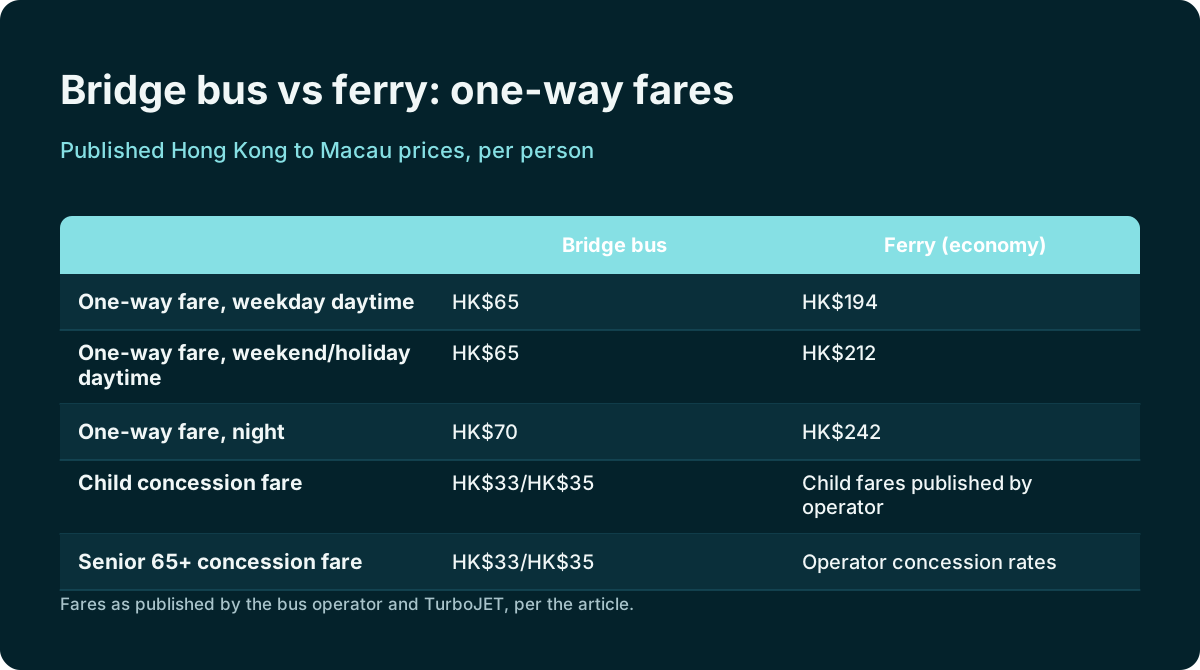
The published one-way fare is HK$65 in the daytime and HK$70 overnight, with concession fares of HK$33 and HK$35. Children under 3 years or under 95cm travel free. The concession rate applies to children under 12 or under 1.2m, passengers with disabilities, and seniors aged 65 and over at 50 percent off. Fares are per person, per direction, with no luggage surcharge published.
Against the ferry, the arithmetic is not close. TurboJET's published economy fare for the Hong Kong to Macau day sailing is HK$194 on weekdays and HK$212 on weekends and public holidays, rising to HK$242 at night, after an increase that took effect in April 2026. The bridge bus at HK$65 undercuts the cheapest ferry by roughly two thirds. A family of four saves close to HK$500 on a round trip by taking the bridge, before you count the different onward costs on each side.
The honest trade is time and comfort. The ferry operator publishes a sailing time of approximately 60 minutes, door to terminal door, with a seat and a cabin and the option of paying more for premium classes. The bus is a short drive bracketed by two border crossings you walk through yourself. If the queues are short the bus can feel nearly as fast; if a holiday crowd is moving through the ports, the ferry's single combined clearance can beat it. Neither answer is guaranteed on a given day.
Here is how the real costs stack up for a visitor heading to the theatre, using only published figures. The bridge bus fare is fixed and cheap; the ferry fare depends on day and time; and the onward leg from each arrival point differs, with the peninsula terminal further from Cotai than the bridge port is.
| Route element | Bridge bus | Ferry (TurboJET, economy) |
|---|---|---|
| One-way fare, weekday daytime | HK$65 | HK$194 |
| One-way fare, weekend/holiday daytime | HK$65 | HK$212 |
| One-way fare, night | HK$70 | HK$242 |
| Children | Under 3 or under 95cm free; under 12 or under 1.2m at HK$33/HK$35 | Child fares published by operator |
| Seniors 65+ | 50 percent off (HK$33/HK$35) | Operator concession rates |
| Operating hours | 24 hours | Scheduled sailings, daytime and evening |
| Departs from | Hong Kong Port (airport side) | Sheung Wan only in 2026 |
| Lands at | Macau Port, Cotai side | Outer Harbour, peninsula side |
| Published crossing time | Not published by operator | Approximately 60 minutes per operator |
One more cost belongs in this section because it surprises people: if you are pricing the whole evening, the show itself starts at published venue prices of MOP 698 for Gallery up to MOP 1,598 for Golden Circle, with an early-bird Gallery price of MOP 558 when booked 14 days ahead, and through the live listing from about $54.95 per person. The bridge savings on transport are real, but they are a rounding error next to the seat-tier decision, which our House of Dancing Water seating plan guide covers in detail.
What Are The Border Formalities On The HZMB Bus Route?
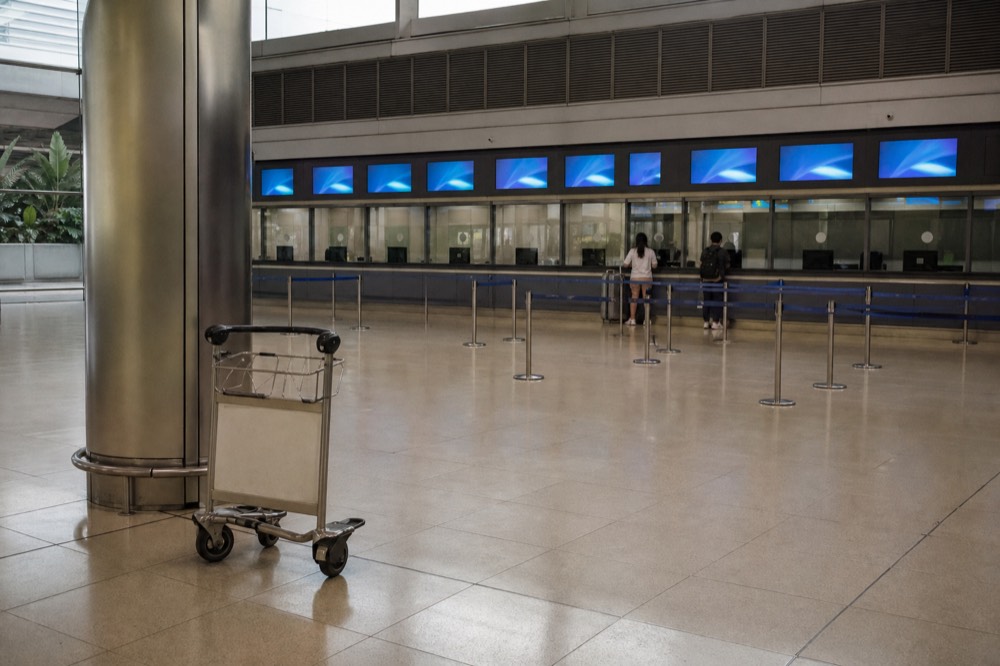
You clear two separate borders on foot: Hong Kong departure controls at Hong Kong Port before boarding, and Macau arrival controls at Macau Port after the crossing. The shuttle ride itself sits between the two checkpoints. Your passport and any required visa or permit are checked at both, and there is no combined clearance, so allow queue time at each end on top of the driving time.
The sequence is the part first-timers get wrong. At Hong Kong Port you first reach the departure hall, clear Hong Kong immigration outbound, then board the shuttle. The ride across the bridge is short. At Macau Port you disembark, walk into the arrival hall, clear Macao SAR immigration inbound, collect any bags from the belt if you checked nothing you did not carry on, and exit into the Macau side. Your total time is two immigration queues plus a drive, and both queues move at the pace of the crowd in front of you.
Visa-free stay lengths differ by nationality, and the Macao SAR government's own immigration page is the authority: British citizens get up to 6 months, EU and Schengen passport holders up to 90 days, and most other listed nationalities including the United States, Canada, Australia, Singapore, Japan and South Korea up to 30 days. That asymmetry is real and rarely stated correctly; a blanket "30 days for everyone" line is wrong for the UK and the EU. Hong Kong permanent residents enter on their Permanent Identity Card for up to a year.
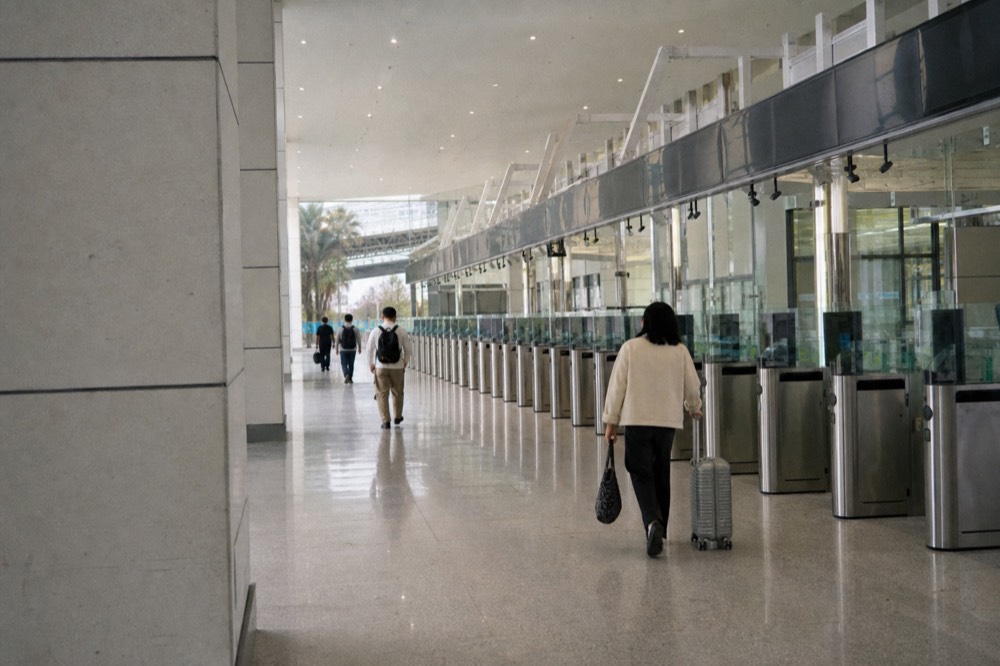
Whether automated e-channel gates are open to foreign visitors is genuinely unresolved in the current published rules, so do not plan around them. Assume a staffed booth with a stamp or a slip, and you will never be disappointed. If you are travelling onward into Zhuhai or elsewhere in mainland China, that is a third border with its own rules, and it is not covered by the Macau arrival described here.
One formality that is not immigration but bites anyway: Macau's customs allowance for arriving visitors is unusually strict on tobacco, 19 cigarettes or one small cigar per person per day without declaration. Excess must go through the red channel. Macau also bans the import of electronic cigarettes outright. Both rules are published by the Macao Customs Service and catch people crossing from Hong Kong regularly.
| Formality | Where | What happens |
|---|---|---|
| Hong Kong departure | Hong Kong Port, before boarding | Outbound immigration check, passport or HK ID |
| Bridge crossing | On the shuttle | Short drive, no checks on board |
| Macau arrival | Macau Port, after disembarking | Inbound immigration, stay length per nationality |
| Customs | Macau Port arrival hall | Green or red channel; strict tobacco allowance, e-cigarette import banned |
| Stay length, UK | Macau Port | Up to 6 months visa free |
| Stay length, EU/Schengen | Macau Port | Up to 90 days visa free |
| Stay length, US, Canada, Australia and most others | Macau Port | Up to 30 days visa free |
| Hong Kong residents | Macau Port | Up to 1 year on Permanent Identity Card |
How Does The Shuttle Work After Dark?
The Golden Bus runs 24 hours, with overnight departures every 30 minutes, at the overnight fare of HK$70. The concession overnight fare is HK$35. This is the only scheduled public cross-border link between Hong Kong and Macau that operates through the night, since ferries stop and no overnight sailing exists from any Hong Kong terminal.
This is where the bridge stops being a budget option and becomes the only option. The last ferries leave in the evening; the airport link is not running as a regular scheduled public service in 2026; and if you are in Macau at midnight with a Hong Kong hotel waiting, the bridge bus is your route home. Equally, if your plan is a same-day trip built around an evening performance, the overnight schedule removes the pressure of racing a ferry timetable.
The show's current pattern is two performances a day, Wednesday through Sunday, dark on Mondays and Tuesdays, with start times listed at 16:30 and 19:30 in the mid-2026 period. Times are seasonal and have shifted across the year, so the operator's calendar is the reference rather than any printed table. A 19:30 performance runs about 90 minutes with no intermission, so you exit around 21:00. One guest review on the live listing notes that getting to the Taipa ferry terminal after an evening show that ended around 21:40 was a problem for them; that is a reviewer's account, not a promise, but it points at the real risk of ferry-dependent plans.
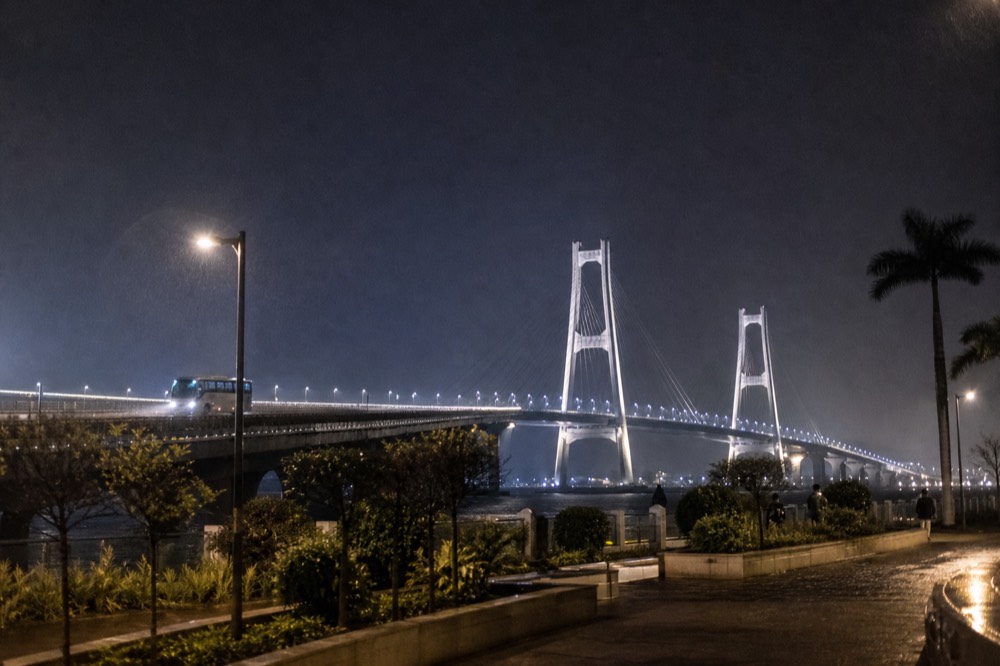
The practical after-dark sequence, using only published hours: exit the theatre at City of Dreams, travel to Macau Port, clear Macau departure, board the shuttle, clear Hong Kong arrival at Hong Kong Port, and continue onward from the airport-side port to wherever you sleep. The Macau side of the HZMB port serves Hong Kong-bound traffic 24 hours, matching the shuttle's round-the-clock schedule, so the border itself is never the obstacle.
One seasonal caveat deserves its own sentence. At tropical cyclone Signal 8 and above, the Macao SAR government suspends the HZMB shuttle buses and the ferries alike. Typhoon season runs June to October, and the government's tropical cyclone signal system is published on its portal. If a storm is approaching, the operator's own announcements and the show's website govern whether the performance proceeds.
Bus Or Ferry: Which Is Better For An Evening Show Ticket?
For a same-day evening trip, the bus wins on cost, on landing side and on late-night resilience, while the ferry wins on comfort and on a single terminal-to-terminal journey from downtown Hong Kong. The bus costs HK$65 to HK$70 against HK$194 to HK$242 economy, lands on the Cotai side near the theatre, and keeps running after the ferries stop. The ferry gives you a 60-minute published sailing from Sheung Wan.
The decision usually comes down to where in Hong Kong you start and how much the evening matters. If you are near Sheung Wan or Central, the ferry is a single leg from a downtown terminal with a published sailing time, and the crossing itself is part of the evening. If you are near the airport, in Kowloon East, or travelling late or on a budget, the bridge bus is faster to reach, cheaper by two thirds, and drops you on the correct side of Macau.
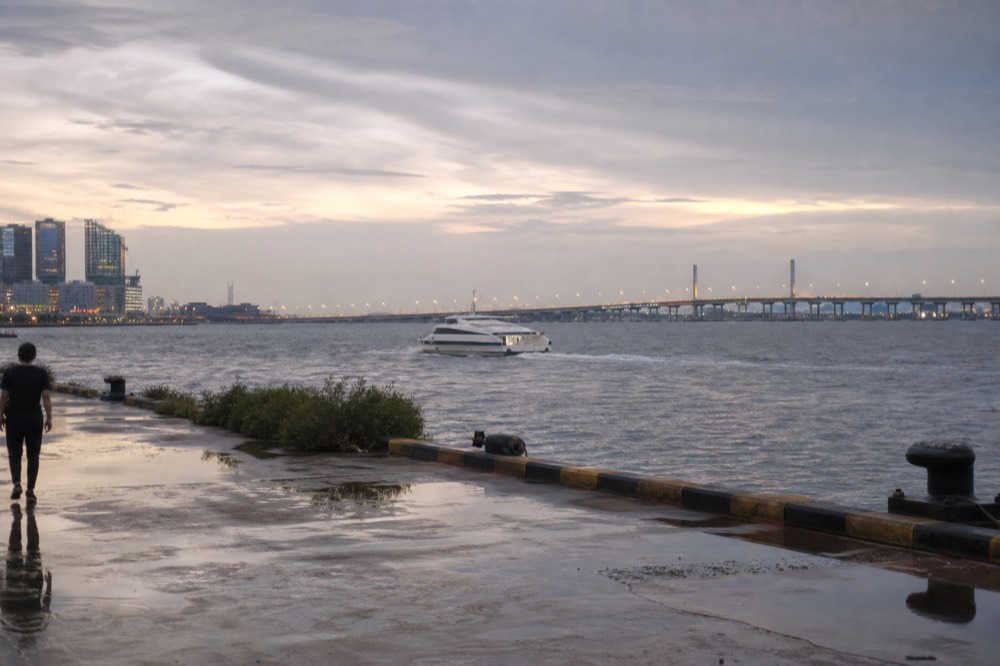
There is also a package that fuses the two: the venue's own Show and Sail offer starts from MOP 798 per person and bundles a Hong Kong to Macau round-trip ferry ticket with a show ticket, running as an official promotion. That is a venue-direct offer rather than something on the live listing, but it tells you the operator itself treats the ferry as the premium arrival route. Our Hong Kong to Macau ferry guide covers the sailing side in full, and the cheapest way to get to Macau from Hong Kong comparison puts every option side by side.
For the show itself, the ticket is the same either way. The listing is rated 4.8 across about 20,165 reviews, with 400,000-plus booked over the listing's whole life, which spans the original 2010 production as well as the reimagined show that relaunched in May 2025. Seats are assigned automatically in your chosen section at the time of booking, so the tier you pick, Gallery, Signature, Grand, Premium or Golden Circle, matters more than the seat number. Check availability on the live listing for your date, and see the show ticket page for the full option breakdown.
How Do You Get From The Macau Port To City of Dreams?
From Macau Port you reach City of Dreams by taxi, public bus or the resort's free shuttle. A taxi starts at a flagfall of MOP 21 with an MOP 8 surcharge at the HZMB port, public buses charge MOP 6 cash, and City of Dreams runs free shuttles from the border ports, though Melco publishes its route schedules as images rather than text. The LRT Taipa Line is another option from other entry points.
The taxi is the simple answer. Published DSAT fares are MOP 21 flagfall for the first 1,600 metres, MOP 2 per subsequent 220 metres, MOP 2 per 55 seconds of waiting, MOP 3 per piece of luggage in the boot, and an MOP 8 surcharge for journeys from the HZMB port. That luggage charge and port surcharge are the two that surprise arriving visitors, and almost no guide lists them. For a short Cotai hop the meter rarely climbs far past the flagfall plus surcharge.
The bus is the budget answer: MOP 6 in cash on regular routes, or MOP 3 with a stored-value Macau Pass card, per the published DSAT fare table. The resort shuttle is the free answer: City of Dreams operates free Tourism and Leisure buses serving the border ports among other entry points, and the honest caveat is that Melco publishes those schedules as image files on its getting-here page rather than a text table, so check the operator's page rather than trusting any frequency figure you read elsewhere.
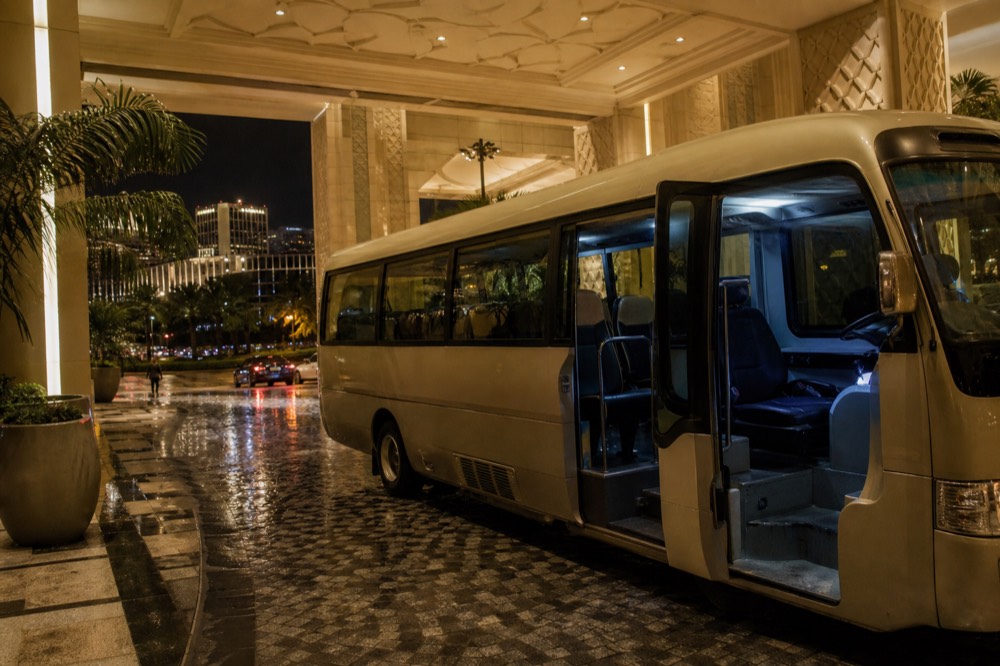
If you arrive by ferry instead, the Taipa ferry terminal is the Cotai-side one, and the LRT Taipa Line connects the airport, the ferry terminal and the Cotai resorts for a published MOP 6 single for up to three stations, with line hours from 06:30 and headways of 5 to 10.5 minutes. Three lines operate: the Taipa Line, extended to Barra, plus the Seac Pai Van and Hengqin lines. The theatre sits at City of Dreams Level 1, at the northeast entrance opposite the Jin Ying restaurant, with nearly 2,000 seats including 20 wheelchair positions in the last row.
| From Macau Port to City of Dreams | Cost | Notes |
|---|---|---|
| Taxi | MOP 21 flagfall + MOP 8 port surcharge + MOP 3 per bag | Metered; shortest door-to-door |
| Public bus | MOP 6 cash, MOP 3 with Macau Pass | Regular routes, published DSAT fares |
| Resort free shuttle | Free | Schedules published as images; confirm on the operator's page |
| LRT (from other entry points) | MOP 6 single, up to 3 stations | Taipa Line serves Cotai resorts, airport, Taipa ferry terminal |
What Should You Know Before Booking The Bus For A Show Day?
Book the show first and the transport second, because the theatre goes dark on Mondays, Tuesdays and designated dates, including a listed dark period in September 2026, while the bus runs every day. Arrive at the theatre at least 15 minutes before the performance, or an hour early to collect a physical ticket.
That last line is the one that makes transport planning matter. The bridge bus removes the ferry timetable from your risk list, but it cannot remove the show's own schedule or the venue's final-sale terms. The safe structure for a same-day trip is: an afternoon crossing, time for the border queues at both ends, an early dinner at the resort, the 19:30 performance, and then the overnight shuttle home with no last-departure anxiety. The venue's official page at City of Dreams carries the current calendar and terms.
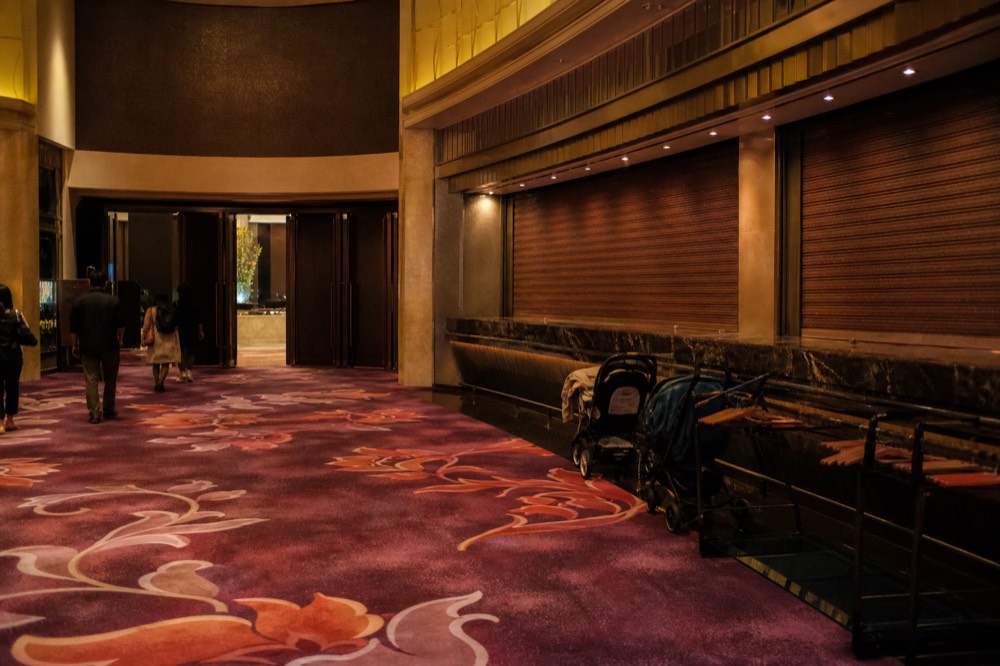
A few practicalities close the picture. Dress appropriately and wear shoes; the theatre has a stated dress expectation. Outside food and drink are forbidden, with concessions beside the box office. Personal photography is allowed but flash and video recording are prohibited. Children 12 and under need an accompanying adult, the show is not recommended for 6 and under, and every audience member needs a ticket, though a child 2 or under may share an adult's seat free. There is a cloakroom for strollers and luggage near the theatre foyer.
The backstage tour is the one add-on that changes the transport maths: it runs after the evening performance, starting around 21:15, lasts about 45 minutes, is priced from MOP 888 per person with a minimum age of 12, and takes guests past the Golden Boat and Dream Pagoda props to the 17 million litre pool. If you book it, you are leaving City of Dreams closer to 22:15, which the bridge's 24-hour schedule absorbs without a thought and a ferry timetable would not. Our how long is the House of Dancing Water guide breaks the timing down.
Parking, for completeness: the resort offers three hours free per day for all visitors, and a same-day show ticket adds another three free hours, redeemable at the Dancing Water Boutique, with extra hours at MOP 25 for a car. That is for drivers, not bridge-bus riders, but it rounds out the arrival options.
The questions below cover the route's fares, boarding points, border formalities, overnight schedule and onward connections to City of Dreams, with every figure drawn from the published operator and government sources used throughout this guide. Each answer stands alone, so you can jump straight to the one that matches your plan.
Common Questions About The Hong Kong To Macau Bus
Is There A Direct Bus From Hong Kong To Macau?
Yes. The HZMB Golden Bus shuttle runs 24 hours a day between Hong Kong Port and Macau Port across the bridge, at HK$65 daytime and HK$70 overnight, with departures every 5 to 10 minutes at daytime peak and every 30 minutes overnight. It runs between the two border ports only, not to city-centre stops.
How Much Does The Hong Kong To Macau Bus Cost?
HK$65 one way in the daytime and HK$70 overnight. Concession fares are HK$33 and HK$35 for children under 12 or under 1.2m, passengers with disabilities and seniors 65 and over at half price. Children under 3 years or under 95cm travel free.
Where Do You Board The Hong Kong To Macau Bus?
At Hong Kong Port, the checkpoint island on the airport side of Lantau, reached by bus, taxi or airport transport links. The shuttle arrives at Macau Port, the matching island checkpoint on the Cotai side of Macau.
Does The Hong Kong To Macau Bus Run At Night?
Yes, around the clock, with overnight departures every 30 minutes. It is the only scheduled public cross-border link between Hong Kong and Macau running through the night, since ferries stop in the evening and no overnight sailing exists.
Is The Bus Or The Ferry Better For An Evening Show?
The bus is cheaper by roughly two thirds, lands on the Cotai side near City of Dreams, and keeps running after the ferries stop, which suits a same-day evening trip. The ferry offers a published sailing time of about 60 minutes and a single leg from Sheung Wan. Both work; the bus removes the timetable risk.
How Do You Get From The Macau Bridge Port To City of Dreams?
By taxi at a MOP 21 flagfall plus an MOP 8 port surcharge and MOP 3 per bag, by public bus at MOP 6 cash or MOP 3 with a Macau Pass, or by the resort's free shuttle, whose schedules Melco publishes as images on its getting-here page.