Is It Safe For US Citizens To Travel To Macau?
A straight, sourced answer for American visitors heading to Macau for a show: entry rules, the US advisory's exact wording, typhoon season, money and everyday safety, with no scaremongering and no false reassurance.
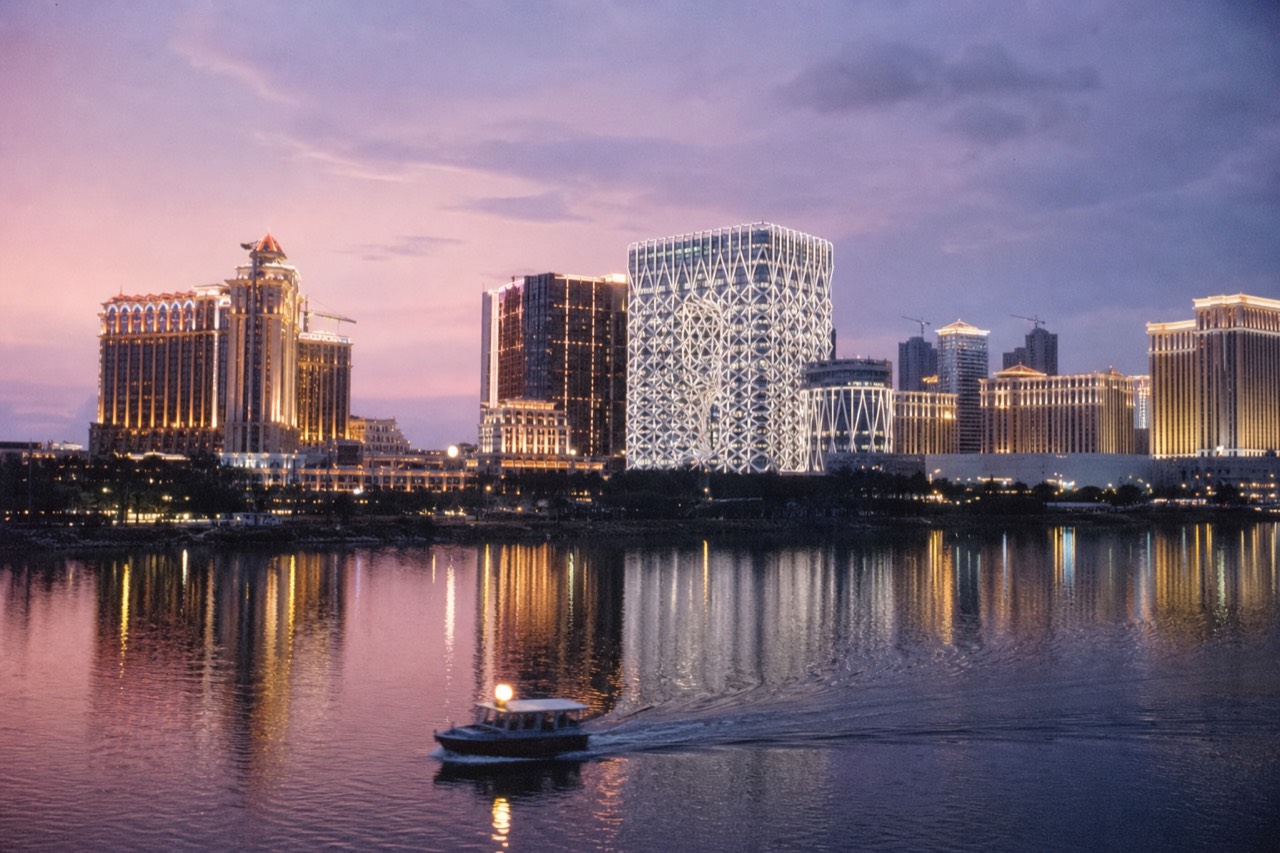
Macau runs on a scale most Americans underestimate before they arrive. The Special Administrative Region logged 3,487,994 visitor arrivals in May 2026, up 3.4 percent year on year, and cumulative arrivals passed 20 million for the year on 20 June, eighteen days earlier than the previous year managed. This is one of the most visited places per capita on earth, and the overwhelming majority of those trips end without incident. The question "Is it safe for US citizens to travel to Macau?" deserves a precise answer rather than a shrug, because the details, entry rules, the advisory wording, typhoon season and the money system, genuinely affect how a trip feels on the ground.
Is It Safe For US Citizens To Travel To Macau?
Yes, in practical terms. Americans enter visa-free for up to 30 days, violent crime against tourists is rare, and the city's transport and resort infrastructure are modern and heavily used. The US State Department's Macau advisory page carries mixed wording, listing "Exercise Increased Caution" in its regional summary while the Macau-specific section reads "Reconsider travel due to a limited ability to provide emergency consular services." The caution is about consular access and local laws, not street danger.
That split wording matters, and it is the single most misunderstood element of the whole question. One strand of the advisory page says Level 2, Exercise Increased Caution, in its summary section covering Mainland China, Hong Kong and Macau together. The dedicated Macau section reads "Reconsider travel due to a limited ability to provide emergency consular services. Exercise increased caution due to the arbitrary enforcement of local laws." Two different levels, on the same official page, and both are real. Any article that flattens this to a clean "Level 2" or a clean "Level 3" is misquoting the source. You can read the exact current wording on the US State Department's Macau travel advisory page.
What the advisory is actually flagging is not muggings or unrest. It is two things. First, consular access: Macau is a Chinese Special Administrative Region, and the US Consulate General sits in Hong Kong, so help in an emergency is one step further away than it would be in, say, Tokyo. Second, "arbitrary enforcement of local laws," which in practice means the same thing it means for Mainland China broadly: know the local rules, because some things that are minor elsewhere, particularly anything touching national security legislation, are treated seriously here. For a visitor flying in for a water show and some dumplings, the everyday risk profile is closer to Singapore than to anywhere genuinely risky.
The British government's equivalent page, for comparison, carries no advice against travel to Macao at all, and its last substantive update concerned entry requirements and dual nationals. Australia's Smartraveller advises "Exercise a high degree of caution." Three governments, three framings, none of them describing a dangerous city.
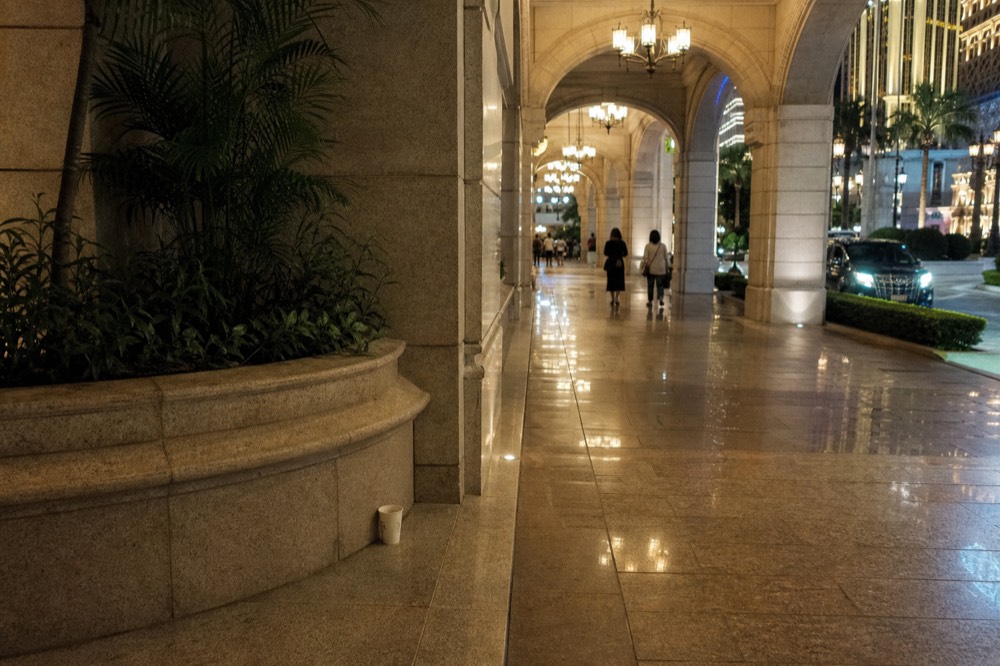
Everyday safety in Macau is, by most visitors' accounts, unremarkable in the best way. The resort corridors of Cotai are patrolled and camera-covered, the streets of the peninsula's historic centre are busy into the night, and the standard tourist itinerary, Senado Square, the Ruins of St Paul's, a ferry or a bridge crossing, a show at City of Dreams, involves almost no exposure to the kind of situations advisories worry about. Pickpocketing exists wherever crowds exist; ordinary city caution covers it. One genuinely Macau-specific point: the territory bans the import of electronic cigarettes outright, and the tobacco allowance is unusually strict at 19 cigarettes per person per day, so anyone arriving with a full carton or a vape should expect the red channel at customs, not a shrug.
If the trip centres on The House of Dancing Water, the practical planning happens before departure. Our House of Dancing Water Tickets hub walks through all nine seating options, and the show's own entry rules, a 15-minute arrival buffer, no flash or video recording, and a note that the front two rows of every section get splash protection, are worth reading once. The show times guide covers the seasonal schedule shifts, and the seating plan breakdown explains which rows actually get wet.
What Do US Citizens Need To Enter Macau?
A valid US passport, with no visa required for stays of up to 30 days. The Macao SAR government's own immigration service lists the United States among nationalities granted 30 days visa-free, alongside Canada, Australia, Singapore, Japan, South Korea and most Southeast Asian states. British citizens get up to 6 months and EU passport holders up to 90 days, so the 30-day figure is not universal. Your passport should be valid for the duration of your stay.
The authoritative source is the Macao SAR Government Portal's entry page, run by the Public Security Police Force, and it is worth checking before any trip because the nationalities table is the one place where a generic travel blog will mislead you. The asymmetry is real and rarely stated correctly: the blanket "30 days visa free for everyone" line you see in most guides is simply wrong for UK and EU passport holders, who get far longer, and it would also be wrong if Macau tightened the US line, so verify rather than trust.
Two practical notes. Hong Kong permanent residents enter on their Permanent Identity Card for up to a year, and mainland Chinese visitors travel on the Two-way Permit, so the queue composition at any Macau checkpoint is genuinely international. And if you are combining Hong Kong and Macau on one trip, which is the classic itinerary, remember that each crossing between them is a full international border crossing: leave time, and carry the passport every time, even though the ferry takes only about an hour, a duration the operator itself publishes as approximately 60 minutes.
The visa-free stay lengths most commonly asked about, straight from the government's table:
| Passport | Visa-free stay in Macau |
|---|---|
| United States | Up to 30 days |
| United Kingdom | Up to 6 months |
| EU and Schengen states | Up to 90 days |
| Canada, Australia, Singapore, Japan, South Korea | Up to 30 days |
| Hong Kong permanent residents | Up to 1 year |
Is Macau Safe At Night For Tourists?
Yes, in the areas tourists actually visit. Cotai's resort strip and the peninsula's UNESCO-listed historic centre are both busy, lit and policed well past midnight, and casinos run 24 hours, which keeps a constant flow of people and security through the core zones. The Macau Grand Prix week in November is the one period when crowds and hotel rates spike noticeably, so book ahead rather than avoid.
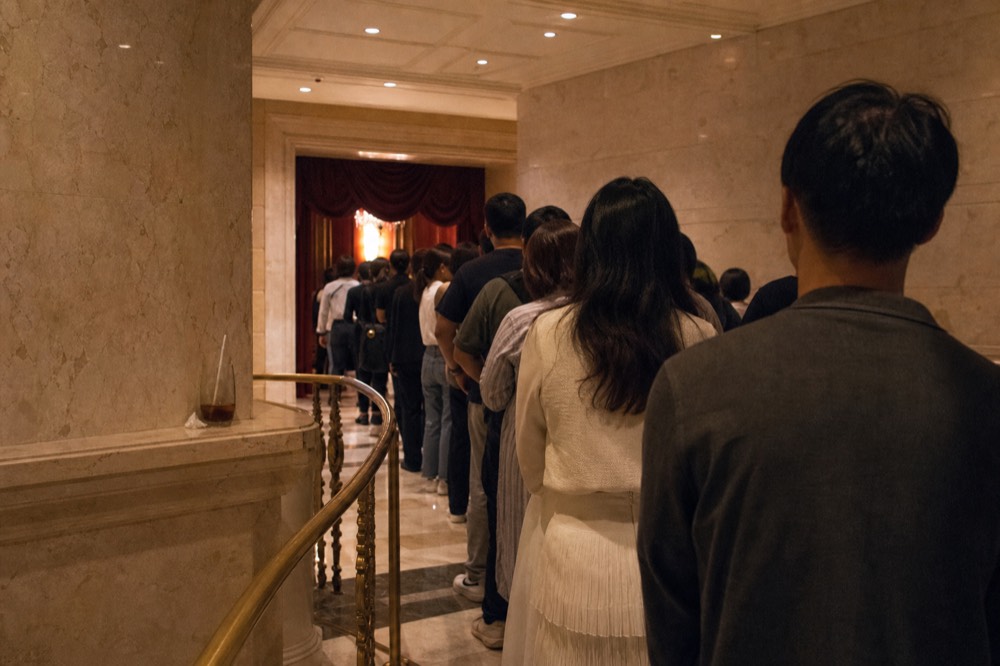
The night-time economy here is unusual. Because the casinos never close, the arteries connecting them, the Cotai strip, the ferry terminals, the free shuttle routes, never fully empty either. A visitor leaving a 19:30 performance of The House of Dancing Water, which runs about 90 minutes with no intermission, walks out into a resort at peak dinner-and-casino hour, not into an empty street. Our things to do in Macau at night guide covers the fuller evening menu, from the Galaxy Macau Diamond Show, which performs every 30 minutes, to the Wynn Palace SkyCab, listed as running until 22:00 Sunday to Thursday and midnight on Fridays and Saturdays.
The honest caveat is not crime but logistics. One guest review on the show's live listing, dated December 2025, described struggling to reach the Taipa ferry terminal after the evening performance ended around 21:40. That is a planning problem, not a safety problem: check the last ferry or shuttle before you commit to the late show, especially if you are staying in Hong Kong. The Hong Kong to Macau ferry guide has the current fare tables and the one-terminal detail that trips up most first-timers.
What About Typhoons?
Macau's typhoon season runs June to October, and the 2026 seasonal forecast estimated 5 to 8 tropical cyclones affecting the territory, a normal to slightly above normal count. At Tropical Cyclone Signal 8 and above, ferries, the HZMB bridge shuttle buses and other transport are suspended, which is how a visitor actually misses a show. The signal system is public, precise and worth learning before you go.
The government publishes the full signal ladder: Signal 1 is standby, with a cyclone centre within 800 km; Signal 3 is strong wind; Signal 8 is gale or storm; Signals 9 and 10 escalate from there. When Signal 8 is hoisted, public transport, the free resort shuttles and the cross-border ferries stop running, and the government portal publishes exactly which services are affected. You can follow the signals on the Macao SAR Government Portal's tropical cyclone page.
For a show-bound visitor the risk is concrete but manageable. The House of Dancing Water's own terms say that if Signal 8 approaches, the show announces on its official website whether the performance proceeds. Consider travel insurance that covers typhoon disruption for any September or October trip. The season was already active in late August 2026, when Tropical Storm Saudel prompted a Signal 1 with a moderate probability of Signal 3 flagged for the following day.
Is The Money And Payment Situation Safe And Straightforward?
Yes, with one quirk worth knowing before you land. The Macanese pataca is fixed to the Hong Kong dollar at HKD 1 to MOP 1.03 under a currency board with full reserve backing, and Hong Kong dollars circulate widely in Macau at or near par, while patacas are generally not accepted back in Hong Kong. US dollars are not street currency; change money or withdraw locally.
The peg has not moved, and a fixed exchange rate means nobody is going to surprise you with a currency swing mid-trip. The practical wrinkle is the par-or-near-par acceptance of Hong Kong dollars: shops commonly take them, but change usually comes back in patacas, and accepting HKD at exact par quietly costs you the roughly 3 percent difference between the two. For an American visitor the simplest approach is to withdraw patacas once and spend from that, keeping the mental math easy.
Two small official charges are worth knowing because almost no guide lists them. Macau levies a 5 percent tourism tax on services supplied by hotels and hotel bars and similar establishments, which shows up on your bill rather than being negotiated. And taxi fares are published by the transport authority: flagfall is MOP 21 for the first 1,600 metres, with MOP 3 per piece of luggage in the boot and an MOP 8 surcharge for trips from the airport, the ferry terminals or the bridge port. Those two line items are the charges that most often surprise arriving visitors.
Are There Any Laws That Catch Out American Visitors?
A few, and they are specific rather than scary. Macau bans the import of electronic cigarettes entirely. The tobacco allowance is 19 cigarettes per person per day, or one cigar under 3 grams, or 25 grams of tobacco leaf, with excess requiring the red channel. Photography rules at the theatre ban flash and video recording. And the advisory's "arbitrary enforcement of local laws" language means anything touching national security legislation should simply be left alone.
The e-cigarette ban catches people at the border, not on the street: it is an import prohibition, so arriving with a vape is the problem. The tobacco allowance is unusually strict for the region, 19 cigarettes is not a pack, let alone a carton, and the Macao Customs Service publishes the figures under Administrative Orders 209/2021 and 208/2022. Declare rather than gamble; the red channel exists precisely for this.
At the show, the rules are venue rules rather than laws, but they are enforced the same way. The House of Dancing Water's official terms prohibit flash photography, video recording and laser pointers, and the stricter ticketing terms go further, banning professional cameras, GoPros, drones and tablets inside the theatre. The safe reading for an American visitor with a phone: take stills without flash, put the phone away when staff ask, and leave anything that looks like kit in the hotel. The dress code guide covers the rest of the theatre etiquette, which boils down to wearing shoes and not bringing outside food.
Beyond that, the everyday law that matters to a tourist is the ordinary kind: drink-driving limits, drug laws that are strict by any standard, and the general principle that in a dispute, the local language and local procedure win. Register your trip with the Smart Traveler Enrollment Program if you want the State Department to be able to reach you, which is standard advice for any international travel and doubles as the practical answer to the "limited consular services" concern in the advisory.
So Should You Go?
Yes, for almost every American traveller, and the deciding factors are logistical rather than safety-related. Entry is visa-free for 30 days, the city is busy, policed and easy to navigate, and the genuine risks are typhoon-season disruption and a couple of border rules you can learn in five minutes.
The one timing note worth planning around: the 34th Macao International Fireworks Display Contest runs on 12, 19 and 25 September and 1 and 4 October 2026, with displays at 21:00 and 21:40 over the sea in front of Macau Tower, and the 38th Macao International Music Festival runs 2 October to 29 November. Those dates make autumn the city's most atmospheric season, and also its busiest outside Golden Week. The best month to visit Macau post breaks the whole year down if you have flexibility.
For the show itself, the planning math is friendly. Tickets start from about $54.95 per person, the performance runs about 90 minutes with no intermission, and the production carries a 4.8 rating across roughly 20,165 reviews on its live listing, with more than 400,000 bookings over the listing's lifetime. The venue's own early-bird offer takes the Gallery tier from MOP 698 down to MOP 558 when you book 14 days ahead, a genuine saving for anyone organised enough to plan a fortnight out.
The House of Dancing Water is the anchor of most first trips to Cotai, and it is an easy thing to build a safe, low-stress itinerary around: a Wednesday-to-Sunday schedule, two performances a day, and a theatre inside a resort complex with its own hotels, restaurants and shuttle links. If you are weighing whether the ticket itself justifies the flight, the is House of Dancing Water worth it post takes that question on directly.
Whichever seating tier fits your budget, the practical takeaway is the same: book before you fly, arrive at the theatre fifteen minutes early, and let the resort's own shuttle and dining links handle the rest of the evening. A little planning converts the whole trip into something genuinely low-stress.
The short answers Americans ask for most: entry is visa-free for 30 days on a US passport, the advisory's caution concerns consular access and local laws rather than street crime, typhoon season is the main real disruption risk, and the money system is pegged, stable and easy to use once you withdraw patacas. The details behind each answer are below.
Common Questions About Safety In Macau For US Citizens
Is It Safe For US Citizens To Travel To Macau?
Yes, in practical terms. Americans enter visa-free for up to 30 days, crime against tourists is rare, and the resort and transport infrastructure are modern and heavily used. The US State Department's advisory page carries mixed wording, "Exercise Increased Caution" in its regional summary and "Reconsider travel" language in the Macau-specific section, but the concerns flagged are limited consular access and arbitrary enforcement of local laws, not street danger.
Do US Citizens Need A Visa For Macau?
No. The Macao SAR government's immigration service lists the United States among nationalities granted up to 30 days visa-free entry. British citizens get up to 6 months and EU passport holders up to 90 days, so the 30-day figure is specific to your nationality; check the government portal before you travel.
What Does The US Travel Advisory Actually Say About Macau?
The page carries two strands at once. Its Mainland China, Hong Kong and Macau summary section lists "Level 2: Exercise Increased Caution," while the dedicated Macau section reads "Reconsider travel due to a limited ability to provide emergency consular services. Exercise increased caution due to the arbitrary enforcement of local laws." Any source quoting a single clean level is misreading the page.
Is Macau Safe At Night?
In the areas tourists visit, yes. Casinos operate around the clock, which keeps the Cotai strip and the main transport arteries lit, patrolled and busy well past midnight. The realistic night-time problem is logistical, not criminal: the last ferries and shuttles depart before you might expect, so check schedules if you are catching a late show and returning to Hong Kong the same night.
Do Typhoons Affect Travel To Macau?
They can. Typhoon season runs June to October, and at Tropical Cyclone Signal 8 and above, ferries, bridge shuttle buses and other transport are suspended. If Signal 8 approaches, The House of Dancing Water announces on its official website whether the performance proceeds. Check the signal system during autumn trips.
Can I Use US Dollars In Macau?
Not as street currency. The local pataca is pegged to the Hong Kong dollar at HKD 1 to MOP 1.03, and Hong Kong dollars circulate widely at or near par, though change comes back in patacas and accepting HKD at exact par costs you the roughly 3 percent difference. Withdraw patacas locally for the simplest trip.